4.11.7
Practice
4.11.7 • Practice
Complete the following questions to practice the skills you have learned in this lesson.
For questions 1 - 3, use the graph below.
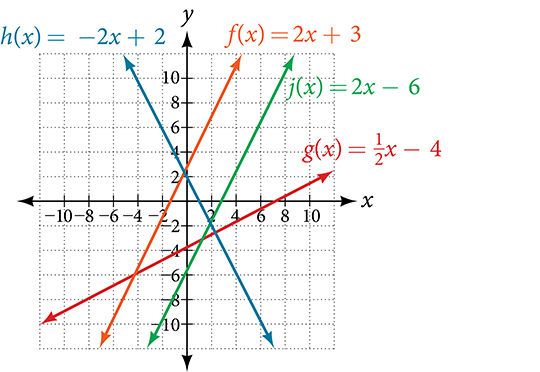
- Tell the shift from to .
-
Up 8
-
Up 9
-
Down 8
-
Down 3
- Tell the transformations from to .
-
Vertical stretch, left 1
-
Vertical stretch, right 1
-
Vertical reflection, down 1
-
Vertical reflection, up 1
- Describe the transformations made from the parent linear function to achieve . Select two that apply:
- Vertical stretch of
- Vertical compression of
- Up 4
- Down 4
- Right 4
- Left 4
- What are the equations of the two lines shown?
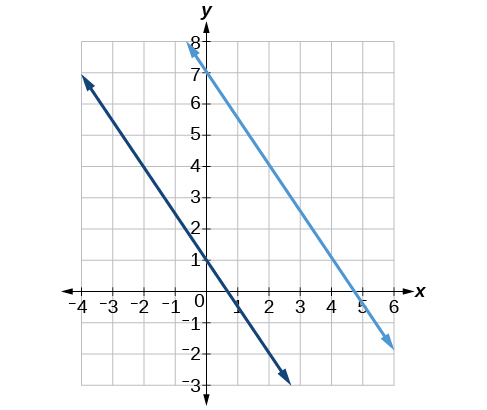
Select two that apply:
- The linear function has a vertical stretch of 3, a vertical reflection, and a vertical shift down 4. Which of the following is the new function?
-
-
-
-
- The linear function has a vertical compression of and a vertical shift up 2. Which of the following is the new function?
-
-
-
-
- What is the equation of the function graphed?
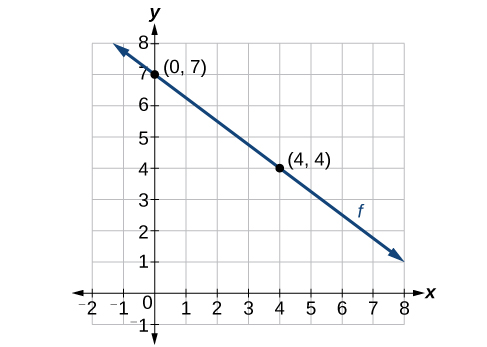
-
-
-
-
- The linear function has a vertical compression of and a vertical shift down 2. Which of the following is the new function?
-
-
-
-
- Which two transformations can be used to obtain the graph of from the graph of ?
-
A translation to the left units followed by a reflection across the -axis
-
A translation to the right units followed by a reflection across the -axis
-
A translation to the left units followed by a reflection across the -axis
-
A translation to the right units followed by a reflection across the -axis
- For the functions and , which statement is true if ?
-
The graph of is the result of the graph of being translated left 14 units and up 12 units.
-
The graph of is the result of the graph of being translated right 14 units and up 12 units.
-
The graph of is the result of the graph of being translated left 14 units and down 12 units.
-
The graph of is the result of the graph of being translated right 14 units and down 12 units.
- Which type of transformation can be used to obtain the graph of from the graph of ?
-
Vertical stretch
-
Vertical shift up
-
Vertical shift down
-
Vertical shrink or compression